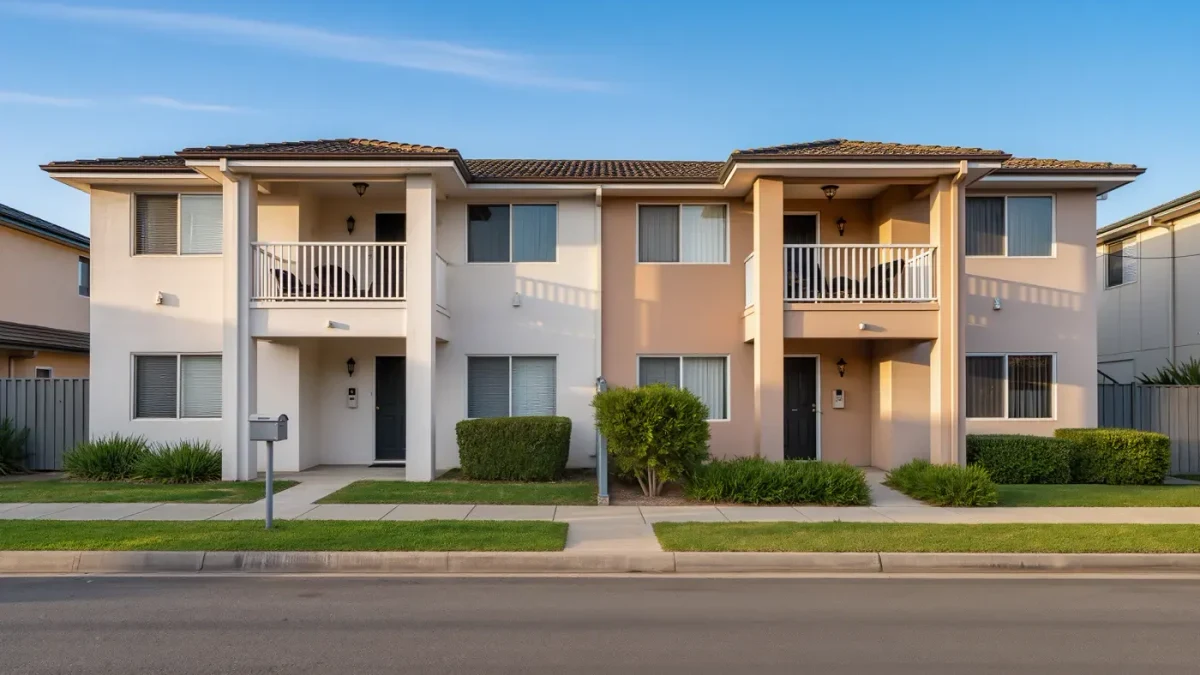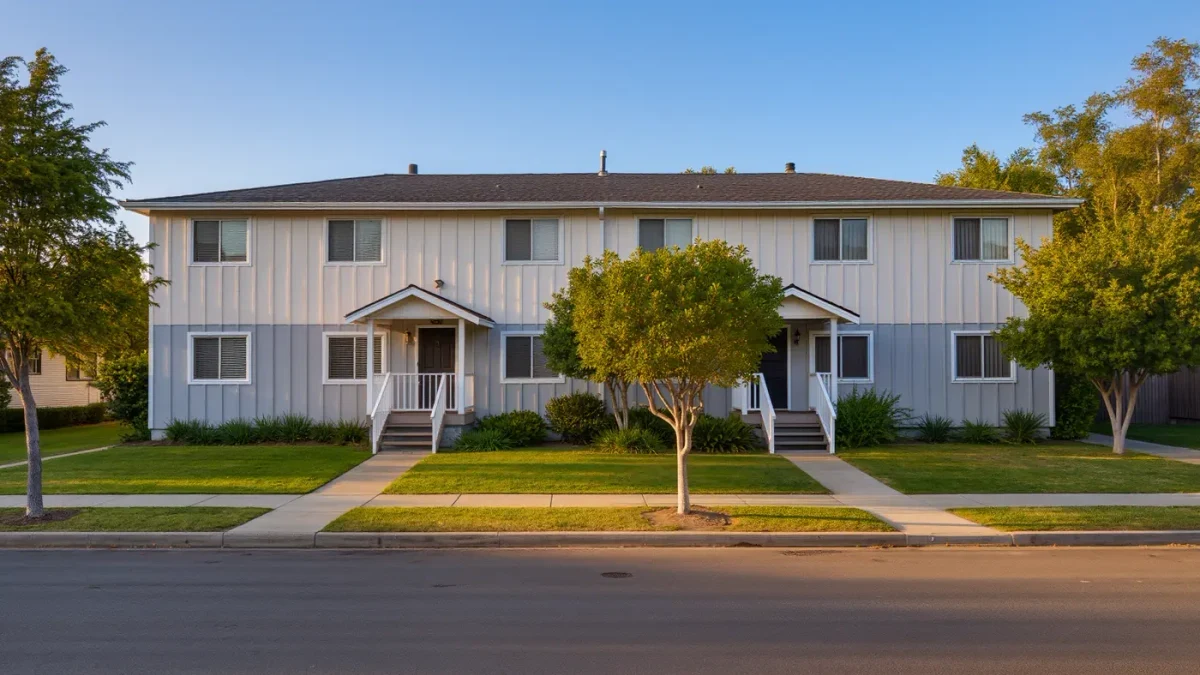
An owner-occupied two-to-four-unit property can be financed with a government-backed or conventional loan at down payments far below investment-property requirements: FHA insures purchases at 3.5 percent down with a 580 credit score minimum, per HUD Handbook 4000.1, and Fannie Mae has allowed 5 percent down on owner-occupied two-to-four-unit conventional purchases since its November 2023 Selling Guide update. The condition is occupancy — the borrower must occupy one unit as a primary residence for at least one year.
Program rules cited below are federal agency guidelines as of the stated dates; overlays vary by lender.
How does FHA financing work on a duplex, triplex, or fourplex?
FHA's Section 203(b) program insures mortgages on one- to four-unit properties where the borrower occupies one unit. The minimum investment is 3.5 percent of the purchase price with a FICO score of 580 or above, per HUD Handbook 4000.1; scores between 500 and 579 require 10 percent down. Loan limits are set per county at the multi-unit level, so a fourplex in a high-cost area borrows against a limit several times the one-family figure.
The distinguishing test arrives on three- and four-unit properties. FHA's self-sufficiency requirement compares the net rental income from the non-occupied units — 75 percent of the appraiser's fair-market-rent estimate — against the full mortgage payment including taxes and insurance. If the rent does not cover the payment, the loan does not close, regardless of the borrower's other income. Duplexes are exempt from the test.
FHA mortgage insurance comes in two layers: an up-front premium of 1.75 percent of the loan amount, financed into the balance, and an annual premium paid monthly. The annual premium persists for the life of the loan on most maximum-financing cases, which is the structural cost of the small down payment.
What changed for conventional loans on small multifamily?
Fannie Mae's November 2023 Selling Guide update cut the minimum down payment on owner-occupied two-to-four-unit conventional loans to 5 percent, from 20 to 25 percent previously, aligning small multifamily with single-family terms; Freddie Mac made a parallel change. The update also raised the allowable seller concession on investment and second-home transactions to 9 percent, which affects buyers pairing an owner-occupied purchase with a later rental acquisition.
Conventional loans at above 80 percent loan-to-value carry private mortgage insurance rather than FHA's premiums, and PMI terminates — automatically at 78 percent LTV of the original value, on request or at seasoning milestones at 80 percent — where FHA's does not. That difference compounds over a hold period and is the usual reason a qualified buyer with 5-plus percent down compares the two paths.
Both agencies count 75 percent of the projected rent from the non-occupied units toward qualifying income on a purchase, per the Fannie Mae Selling Guide, which is what makes the duplex payment fit a household budget that a single-family payment would not.
How do the two programs compare on the same property?
On a hypothetical fourplex priced at $500,000 — an illustration using program rules, not a market forecast — FHA requires $17,500 down at 3.5 percent while conventional at 5 percent requires $25,000. FHA's up-front premium adds about $8,450 to the financed balance before the annual premium begins; conventional adds PMI that depends on credit score and LTV but ends at equity milestones FHA's insurance does not.
The self-sufficiency test cuts the other way: FHA's rent-coverage requirement on three- and four-unit properties screens out marginal deals at underwriting, while conventional files underwrite the borrower's full income and impose no property-level rent test. A buyer whose qualification rests on the rent roll may pass FHA and fail conventional; a buyer with strong outside income may pass both.
Occupancy obligations are identical in spirit: each program requires the borrower to occupy the unit within a stated period — 60 days under FHA rules — and to intend occupancy for a year. Moving out earlier converts the file into a misrepresentation matter, not a paperwork footnote.
What role does house hacking play in qualification?
House hacking — occupying one unit and renting the others — is the use case both programs were structured to absorb. The rent credit does the heavy lifting: 75 percent of the documented market rent from the other units counts toward income, per the Fannie Mae Selling Guide, which can offset most of the payment in high-rent markets.
The offsets have edges. Units must be legal under local zoning, and the appraiser must treat them as rentable; an illegal basement unit counts for nothing. Section 8 vouchers held by prospective tenants count as income in the same way as market rent, a treatment HUD reaffirmed in its landlord-participation materials during 2024 and 2025.
After the occupancy year, the loan stays in place at its original terms. The property becomes a de facto investment holding with owner-occupied financing, which is the arithmetic that draws first-time investors to the structure — and the reason occupancy rules are enforced by the agencies' fraud-review units.
What are the common reasons these loans fall through?
Four failure modes recur in underwriting files. The self-sufficiency ratio fails when the appraisal's market-rent opinion comes in below the rent roll the buyer modeled. The property condition fails FHA minimum-property-standards when peeling paint, missing handrails, or an unpermitted conversion appears on the appraisal. The buyer's reserves fail when the lender applies multi-unit reserve requirements the household cannot document. And the rent credit fails when leases are unsigned or the units are not legally rentable.
Each failure is checkable before an offer. The appraisal drives the rent opinion, the municipal zoning office drives legality, and the lender's overlay sheet — not the agency guide — drives reserves. Files that clear those three gates in advance rarely surprise anyone at week five.
Which program fits which buyer?
FHA fits thinner credit and thinner savings: the 3.5 percent entry and 580 FICO floor exist for exactly that buyer, with the cost being permanent mortgage insurance and the self-sufficiency gate. Conventional fits stronger credit and larger down payments, buying cheaper insurance that terminates and a property-level underwrite that leans on the borrower's income instead of the rent roll.
The honest comparison runs both quotes on the same purchase price, the same appraised rent, and a realistic hold period, then reads the all-in cost at the point the insurance drops off. That arithmetic — not the headline down payment — is what separates the two programs, and it is different for every file.
One final administrative note closes the comparison. FHA case numbers and mortgage insurance certificates transfer with the loan, not the borrower, and conventional PMI cancellation follows a documented schedule the servicer must honor on request. Knowing which exit ramps exist — and when each one opens — is part of choosing the entry door, and both agencies publish the rules in the same guides that govern the purchase.