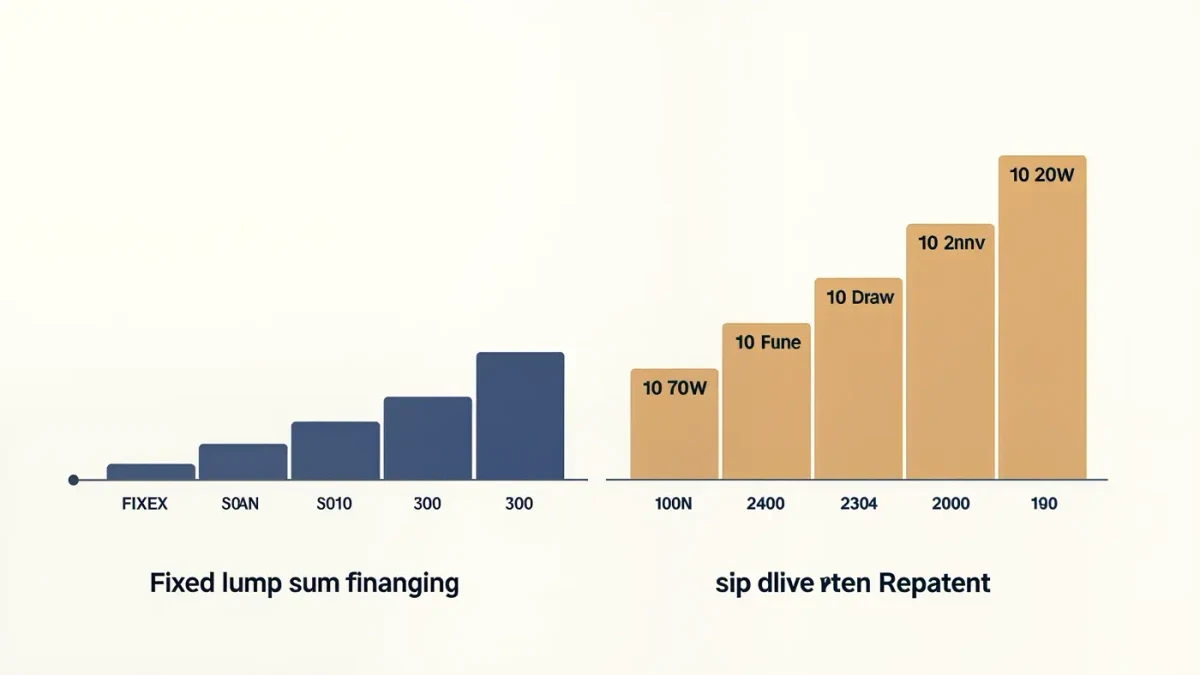
A home equity loan delivers a lump sum at a fixed rate and a fixed schedule, while a HELOC — a home equity line of credit — provides a revolving draw period, typically ten years, at a variable rate tied to a public index plus a margin. Used as a down payment source for a rental, either one adds a second lien on the borrower's residence to the new mortgage on the rental: two debts, one household balance sheet, and a structure where the primary home carries the rental's equity risk.
Program ranges below reflect market conventions and regulator materials as of the stated dates; terms vary by lender and borrower profile.
What is the difference between a HELOC and a home equity loan?
The instruments differ on three axes. Rate: home equity loans fix the rate at closing; HELOCs float, generally at the prime rate plus or minus a margin, resetting when the index moves. Structure: the loan funds once and amortizes immediately; the line draws as needed during a draw period — commonly about ten years — with interest-only payments common during that window, then converts to an amortizing repayment schedule, commonly around 20 years. Cost: loans price higher than lines at origination, because the lender carries the rate risk.
The HELOC's interest-only draw period is the feature that matters for down payment use: the borrower draws the full amount at the rental closing, pays interest only during the draw years, and faces the amortizing payment — on the full drawn balance, at whatever the floating rate has become — at conversion.
Underwriting on both rests on combined loan-to-value — the first mortgage plus the new debt against the home's value. Many lenders cap combined LTV at 80 to 85 percent on primary residences, and the caps tighten when the proceeds fund investment property rather than renovation, a distinction disclosure documents make explicit. Second liens directly on investment property are a narrower, more expensive product; the market for equity extraction lives mainly at the primary residence.
How does the structure stack on a rental purchase?
The stack has three layers. The primary residence supports the HELOC or equity loan, typically at owner-occupied rates — the cheapest debt in the structure precisely because the home secures it. The rental supports the new investment mortgage at investment-property pricing. And the household's cash flow supports both, since the rental's rent may not cover its own payment during lease-up, and the HELOC's interest-only window is a deferment, not a subsidy.
Lenders account for the stack. When a borrower's DTI is assessed for the new investment loan, payments on the equity debt count against qualification, and the 75 percent rental income haircut — standard under the Fannie Mae Selling Guide as of 2025 — applies to whatever rent the new property will produce. The equity line is not invisible money; it is a liability like any other, and underwriters treat it as one.
The Consumer Financial Protection Bureau's materials on home equity products set out the disclosure framework — the HELOC's variable-rate warning, the repayment-conversion schedule, and the conditions under which a line can be frozen or reduced — and that framework is the checklist for what can go wrong.
What are the risks specific to using home equity for a down payment?
The first is collateral substitution. The down payment on a rental would otherwise be unencumbered cash; borrowed home equity converts it into a claim on the house the borrower lives in. If the rental underperforms, the loss lands on the residence, and foreclosure risk migrates from an investment asset to a home.
The second is rate reset on the floating leg. A HELOC drawn against prime reprices with the index, and the interest-only window can end into a materially different rate environment. An illustration using round numbers, not a forecast: a $100,000 line drawn at an 8 percent rate carries an interest-only payment near $667 a month; a two-point index move and conversion to a 20-year amortizing schedule can push the payment past $900 with no change in the balance.
The third is suspension risk. HELOC agreements permit lenders to freeze or reduce a line when the property's value declines materially or the borrower's circumstances change — a provision the CFPB's consumer materials highlight. A frozen line is not a down payment. The fourth is concentration: the household's income, its residence's value, and the rental's performance can become one correlated bet on a single local market.
When does the structure have a defensible case?
The defensible versions share a shape. The equity debt is fixed-rate or capped. The rental's stabilized rent covers its full payment and most of the equity payment. The household retains a stated liquidity reserve measured in months of both payments. And the combined LTV on the residence stays below the level where a routine market decline erases the equity cushion entirely — the same 20 to 25 percent buffer underwriters themselves demand on investment collateral.
The structure earns nothing when it merely stretches a purchase that cash and income cannot support. The tell is simple arithmetic: if the deal only works while the HELOC is interest-only, it does not work, because the draw period ends on schedule regardless of the rent roll's progress.
Timing also carries weight. Equity extracted at the top of a local price cycle secures debt against a valuation that mean reversion can erase, while the rental is purchased at the same cycle point. The two assets reprice together, which is the opposite of diversification.
What should a borrower check before signing either product?
Five items from the disclosures govern the outcome. The rate structure: fixed, or index-plus-margin with stated caps — HELOCs carry lifetime caps, and some carry introductory rates that expire. The draw and repayment schedule: length of the draw window, the repayment term, and whether interest-only payments apply. The suspension and reduction clauses. The prepayment or early-closure terms. And the position in the stack: whether the product sits behind the existing first mortgage and what happens if the first is later refinanced — a HELOC can block or be resubordinated in a refinance, a friction second-lien borrowers routinely discover late.
The comparison with alternatives belongs in the same folder: a larger first mortgage with lender-paid mortgage insurance, a DSCR loan sizing the rental on its own cash flow, a delayed purchase while cash accumulates, or no purchase at all. Each avoids one of the risks above at some cost in rate, time, or opportunity.
None of these choices is advice, and none of them is free. Borrowing against a home to buy an income property is a leveraged position in two correlated assets, and the instruments differ only in how and when that leverage reprices.