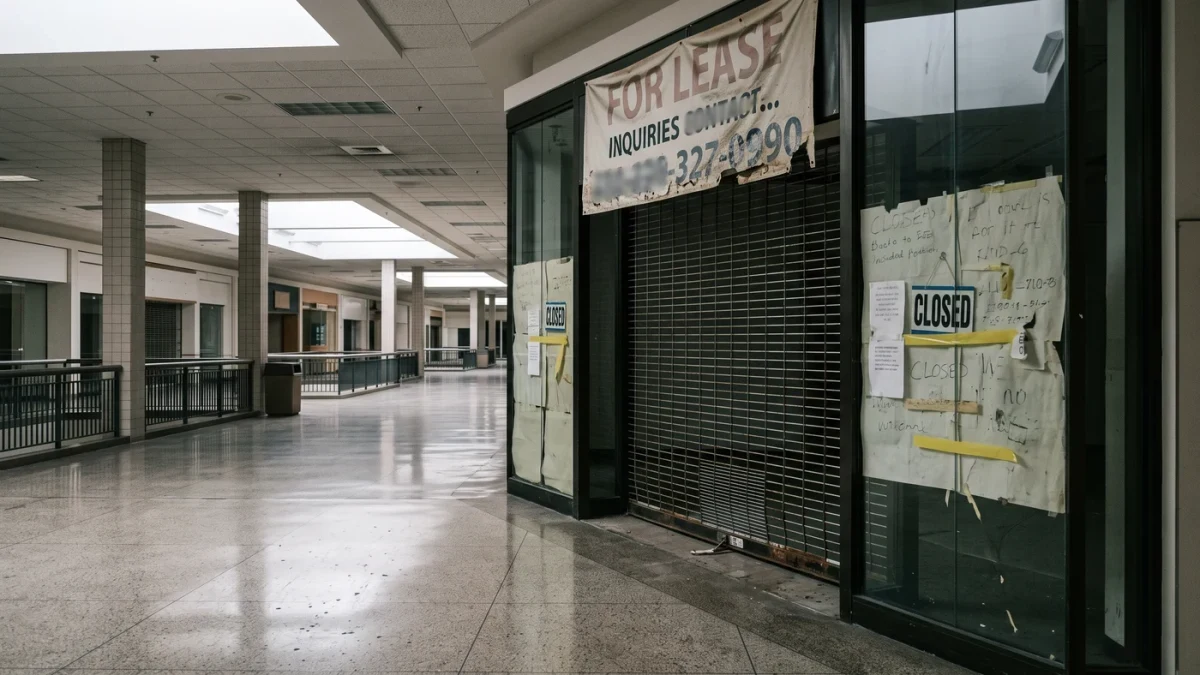
A renewal offer beats a vacancy when the expected cost of the vacancy — lost rent, turnover expense, and days vacant — exceeds the discount or concession the landlord gives up to keep the tenant. The national context frames the stakes: the Census Bureau's Housing Vacancy Survey put the rental vacancy rate in the high-6-to-low-7-percent range through 2024, per census.gov, and renter tenure runs about two years, so a typical unit faces renewal math every 24 months whether the landlord plans for it or not.
This is information about renewal arithmetic, not advice on any specific offer. Lease terms, local rent-cap rules, and tenant quality change the answer unit by unit.
What Does a Vacancy Actually Cost a Landlord?
A vacancy costs lost rent plus turnover expense, and both sides are estimable before the lease expires. Lost rent is monthly market rent divided by 30.4 times expected days vacant. Turnover expense is the make-ready budget — painting, cleaning, repairs — plus leasing costs such as marketing and screening fees. The total is the number every renewal offer should be tested against.
Days vacant is the variable most often guessed wrong. It is longer than the turn itself: notice period, make-ready, marketing, and screening run end to end. A modest planning assumption — on the order of four to eight weeks end to end for a single-family unit — keeps the estimate honest, and a landlord's own tracked history from prior turnovers is the best input available.
Worked as an illustration using round numbers: at $1,800 monthly rent, 30 days vacant is $1,800 lost; add a $2,000 make-ready and $400 in leasing costs, and the expected cost of one turnover approaches $4,200. Against that, a $45-per-month renewal discount — $540 a year — is inexpensive insurance. The illustration uses assumed figures, not a market quote.
How Should a Renewal Increase Be Set Against Retention Risk?
The increase should be set so the extra income from asking exceeds the vacancy risk it creates, discounted by the probability the tenant leaves. Read as an inequality: ask-increase gain times probability of acceptance, versus expected turnover cost times probability of departure. Most small landlords price renewals off last year's rent plus a habit number, which ignores both sides of the inequality.
The comp set disciplines the ask. If the unit already sits at or above the local comparable range — the same five-to-ten comp method used at initial pricing — the renewal headroom is thin and a large increase is a coin flip priced at $4,000-and-up per loss. If the unit sits below the comp median, the increase is defensible with evidence, and presenting the comp range with the offer changes the conversation.
Tenant quality adjusts the probability. A tenant with two years of on-time payment has demonstrated the thing screening tries to predict, and re-running screening risk on a known payer usually costs more than it saves. The retention value of a proven tenant is the avoided expected turnover cost — the same $4,200-scale figure in the illustration above.
When Is a Concession Better Than a Lower Base Rent?
A one-time concession is better than a lower base rent whenever the landlord expects market rents to rise, because the concession expires and the base rent resets to market at the next renewal, while a base-rent cut persists and compounds. A free half-month on a twelve-month lease costs 4.2 percent of annual rent once; a 4 percent rent cut costs 4 percent every year until corrected.
Concessions also preserve optionality under rent regulation. In jurisdictions that cap year-over-year increases off the current base rent, keeping the base high and giving value back as a one-time concession protects future headroom within the cap's arithmetic. Where a cap applies, its jurisdiction and formula must be checked — this is a general mechanism, not a compliance statement for any city.
The structure matters to the tenant as well. For a cash-constrained household, a deposit waiver or a free month can outweigh a smaller ongoing number, which means a landlord can sometimes buy more retention per dollar with structure than with price.
What Timing Makes a Renewal Offer Work?
The offer should reach the tenant 60 to 90 days before lease end, because notice periods and move-out planning start earlier than landlords assume, and a tenant who has already given notice elsewhere is no longer negotiating. Late offers convert into turnovers at the full $4,000-scale cost shown above.
The sequence that works: run the comps at 90 days, set the target range, present the offer with the comp evidence at 75 to 60 days out, and hold a response deadline 30 days before expiry. Every step is dated, so the pipeline of expiring leases becomes a calendar rather than a surprise.
Renewal season is also the cheapest data collection a landlord does. Tenants who decline state reasons — price, condition, relocation — and those reasons, tracked over a few cycles, tell a small portfolio where its product actually stands against the submarket.
What Should Landlords Never Do in Renewal Negotiations?
Never let a lease silently roll to month-to-month without deciding to. Month-to-month tenancy preserves cash flow but shortens the vacancy runway to 30 days, often mid-lease-season, and concentrates turnover risk in the worst weeks. Where a roll is deliberate — as a bridge to sale or renovation — it should be a decision with a date, not a default.
Never negotiate against evidence the tenant has not seen. The comp-based offer exists precisely because a renewal conversation anchored on last year's rent is a losing frame for the landlord; the same comps that justify an increase also justify restraint when the unit is at the ceiling.
How Do Rent Caps and Notice Rules Bound Renewal Offers?
Renewal offers operate inside a regulatory frame in a growing set of jurisdictions: rent-increase caps tied to inflation or fixed percentages, notice windows of 30 to 90 days for increases above thresholds, and just-cause rules that limit non-renewal itself. These rules are state and city law — for example, Oregon's statewide cap tied to inflation plus a margin under its 2019 statute, and numerous municipal ordinances — so the jurisdiction check precedes the arithmetic.
Where a cap binds, the comp set still matters, because it shows whether the cap is the effective constraint or the market is. Where notice rules apply, they set the renewal calendar: an offer requiring 60 days' notice must reach the tenant 60 days before the increase takes effect, which pushes the whole 90-day renewal timeline earlier.
Just-cause rules change the fallback. Where a landlord cannot simply non-renew, the cost of a failed negotiation is not a vacancy the landlord chooses but a dispute the landlord must ground in documented cause — which is one more reason the written comp file and the decision log earn their keep at renewal season.
And never price the renewal in isolation from the regulation check: where rent-increase caps, notice requirements, or just-cause renewal rules apply in the jurisdiction, they bound the offer before arithmetic does. The math above tells the landlord what is worth paying for retention; the local rules say what is lawfully askable.