A maintenance reserve is cash set aside monthly for repair and replacement, and the sizing logic comes from two public datasets: the Census Bureau's American Housing Survey, which records the age and condition of major systems and the repair spending of US homeowners, and Bureau of Labor Statistics consumer price data, which has shown maintenance and repair costs rising faster than rents in recent years, per bls.gov through 2025. Reserves fail when they are sized to averages and spent on exceptions.
This is information about budgeting mechanics, not a prediction of any property's costs. Age, climate, and construction type move every number below.
How Much Should a Landlord Reserve for Maintenance Each Month?
Common sizing frameworks run from a few percent of rent for newer properties to a higher share of rent — or a per-square-foot figure — for older stock, and no single multiplier fits all vintages. The more defensible method is component-based: list the big systems, note installed age against expected service life, and reserve for the depreciation of each. The American Housing Survey supplies the condition baseline: it shows a substantial share of US housing stock is over 40 years old, with heating and plumbing systems to match, per census.gov as of the 2023 survey.
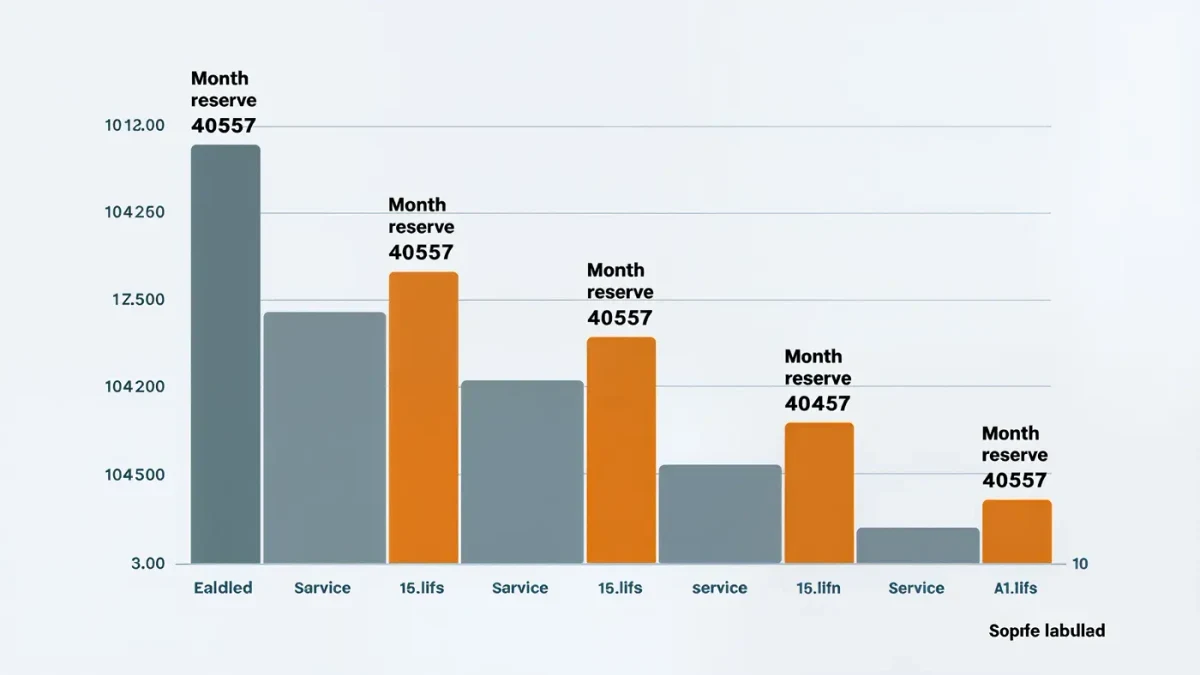
Component math is simple division. A roof with a 25-year life replaced at $12,000 burns $40 a month from year one. An HVAC system on a 15-year cycle at $8,000 adds roughly $44. A water heater at $1,600 over 12 years is $11. The sum of those lines, plus a contingency for the systems without schedules, is the reserve — and it is property-specific by construction.
The percentage shortcuts are not wrong, they are blunt. A rule calibrated on a 2015-built suburban house under-reserves a 1955 house with original galvanized plumbing, which is the exact property that needs the reserve most.
Which Systems Fail on a Schedule, and Which Fail Randomly?
Roofs, HVAC compressors, water heaters, and appliances fail on rough schedules driven by installed age; plumbing leaks, electrical faults, and tenant-caused damage fail randomly and are priced as contingency rather than depreciation. The reserve should hold both: a scheduled-replacement column and a contingency column, commonly guided by the owner's own repair log after a few years of ownership.
Service-life ranges used by inspectors and appraisers give the schedules: asphalt shingle roofs commonly 20-30 years, forced-air furnaces and compressors 15-20, water heaters 8-13, and appliances 8-15 depending on type. Those are planning bands, not guarantees — coastal exposure and hard water move them — but they anchor the division problem.
The random tail is where under-reserving shows up. Two failures in one year — a compressor in July and a water heater in December — is not bad luck; across a portfolio it is frequency, and a contingency column sized from the owner's own log beats a guess. New owners without a log can start with a meaningful contingency share and true it down as data accumulates.
How Do Maintenance Inflation and Repair Costs Change the Budget?
Maintenance inflation compounds the reserve requirement because repair costs have outpaced rent growth in recent years — BLS price indices for household maintenance and repairs rose faster than the rent-of-shelter index over 2020-2025, per bls.gov. A reserve set as a fixed percentage of rent silently shrinks in real terms every year that gap persists.
The adjustment is mechanical: re-price the component schedule annually at current contractor quotes, not at the installation-era prices. A replacement budget built from 2021 quotes under-funds a 2026 replacement by the cumulative inflation gap, which the BLS series implies is material.
Deferred maintenance interacts with inflation in the worst way. A repair deferred past its service life tends to return as a replacement, at replacement prices, frequently with collateral damage — the slow roof leak becomes decking and drywall. The reserve's real function is to make the cheap version of each failure affordable when it arrives.
Where Should the Reserve Sit, and How Is It Tracked?
The reserve should sit in a separate liquid account, funded monthly like a utility bill, and tracked against the component schedule so the balance is readable as a countdown: this much for the roof in roughly this many years. Commingled reserves get spent; segregated reserves get audited by nothing more than a bank statement.
Tracking is a two-column ledger: planned contributions and actual repairs coded to the schedule. After two or three years the log replaces generic rules with the property's own failure history — the highest-value maintenance data a small landlord owns, and the input that makes every later estimate better.
The ledger also disciplines the tax question incidentally, by keeping repair spending distinguishable from improvements — though classification is a tax matter for the owner's accountant, not something this publication resolves.
What Does a Reserve Change About Buying Decisions?
A reserve changes buying decisions by pricing age into offers. Two houses at the same price are not the same asset when one carries a 5-year-old roof and HVAC and the other carries 20-year-old systems: the second carries tens of thousands of dollars of scheduled, dated spending, and the component schedule quantifies that gap before the purchase, not after.
The inspection period is when the schedule gets built. An inspection that lists remaining service life per system converts directly into reserve math, and a buyer who runs that math either prices the work into the offer or budgets it into year one. Skipping the conversion is how reserves start underwater.
When Does Preventive Maintenance Shift the Reserve Math?
Preventive maintenance shifts the reserve math when a cheap recurring task defers an expensive scheduled one: gutter cleaning against roof life, filter changes and coil cleaning against compressor life, water-heater flushing against tank failure. The mechanism is service-life extension — each added year of a component's life divides its replacement cost across more months, shrinking the monthly reserve line.
The Census American Housing Survey records how commonly routine upkeep is deferred, and deferred maintenance correlates with the condition problems the survey also measures, per census.gov as of 2023. The direction is unambiguous even where the dollar effect is property-specific.
The practical version is a short calendar: seasonal tasks per system, dated, with completion logged beside the component schedule. Owners who run the calendar for a few years generate exactly the data the reserve needs — actual component lifetimes on their own properties, which outrank any published band.
Where the framework stops: it produces an expected-cost schedule, not a guarantee. Systems fail early and late; the reserve is sized so the early failures are a cash-flow event rather than a crisis, which is the entire standard a reserve has to meet.