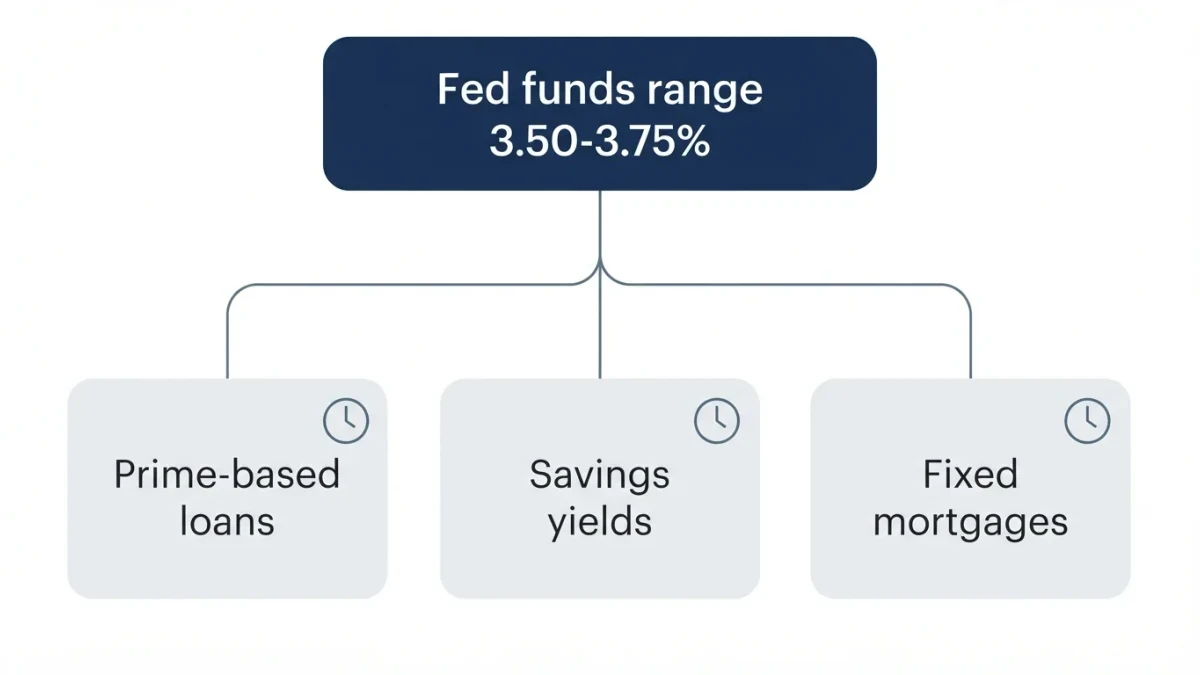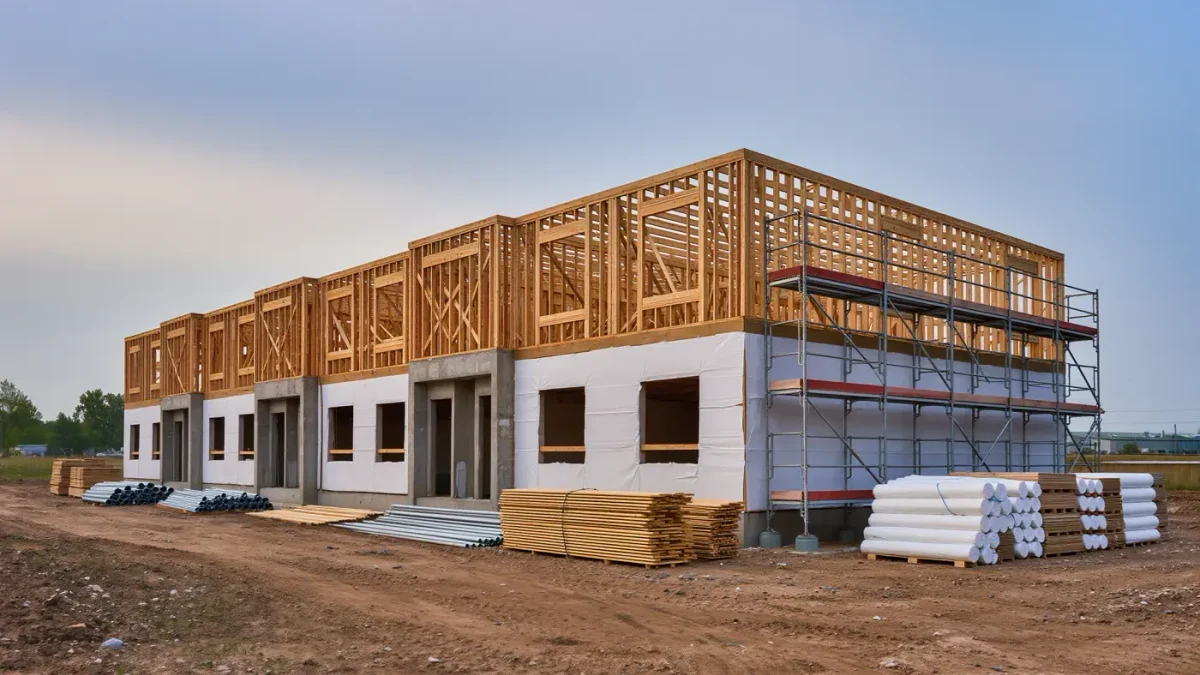
An interest reserve is a portion of a construction loan set aside to pay the loan's own interest during the building period, so the borrower makes no monthly payment while the project runs; interest accrues on funds as they are drawn, and the reserve is drawn down first. On a construction-to-permanent loan — one closing that converts to a standard mortgage at completion — the reserve is sized at underwriting and added to the principal, where it compounds quietly until the building stands.
Terms below reflect agency and market conventions as of the stated dates; individual lender structures vary.
What is a construction-to-permanent loan?
A construction-to-permanent loan — one-time close in agency parlance — closes once, funds the build in stages, and converts automatically into a permanent mortgage when construction finishes. Fannie Mae's Selling Guide, as of 2025, allows one-time-close construction-to-permanent transactions on one-unit properties, including investment occupancy, with the permanent terms locked or floating per the product's structure. The alternative is a two-time close: a standalone construction note refinanced into takeout financing later, with a second set of closing costs and a second qualification.
Draws are the operational core. The builder requests reimbursement against completed work, an inspector verifies the percentage complete, and the lender advances. Interest accrues only on the drawn balance, not the full commitment — which is why construction interest is usually lower in month one than in month nine.
The conversion step is where construction risk ends and amortization begins. On a one-time-close loan, conversion is automatic at the certificate of occupancy, on the terms agreed at the single closing. On a two-time-close, the borrower re-qualifies in whatever rate environment the completion date delivers.
How does an interest reserve actually work?
The lender estimates interest over the projected construction timeline — commonly 9 to 12 months for a small residential build — by modeling the draw schedule: roughly half the loan outstanding on average, times the note rate, times the term. That estimate becomes a line item in the budget, funded at closing like any other cost, and the servicer pays the monthly interest out of it.
An illustration using round numbers, not a rate forecast: on a $500,000 construction commitment at a 9 percent note rate with a 12-month schedule, average drawn principal near $250,000 accrues about $22,500 of interest over the build. A full interest reserve funds that $22,500 from loan proceeds; the borrower trades 12 months of roughly $1,875 payments for a $500,000-plus balance at conversion instead of a $500,000 one.
The trade is cash flow versus principal. A borrower with income prefers to pay the interest monthly — the reserve's compounding is avoided. A borrower whose cash is committed to the down payment and contingency uses the reserve as the bridge, accepting that every reserved dollar is borrowed money at construction-paper rates.
What happens when the reserve runs out?
Reserves are estimates, and builds run long. When the reserve exhausts before the certificate of occupancy, the interest bills move to the borrower's mailbox — monthly payments on a project that is not yet producing anything. Underwriters size reserves from the construction timeline the plans support; a three-month overrun at the illustrative figures above adds roughly $5,600 of unbudgeted interest at the same draw pace.
Delays have a second cost channel: the rate lock. One-time-close products carry lock-period limits, and extensions carry fees, paid in cash, from reserves, or through a rate concession. Per-diem extension fees on expired locks are a standard line in construction lending disclosures.
The mature response is a contingency sized to the project's risk — lenders commonly require contingencies near 5 percent of hard costs on spec or complex builds — with the reserve treated as a budget line that can grow, not a promise that it will not.
How is construction interest different from permanent interest?
Construction notes price above permanent mortgages, because the collateral is incomplete and the risk of loss during the build is at its maximum. The interest reserve therefore accrues at the construction rate — the illustrative 9 percent rather than a permanent-rate quote in the 6s or 7s — making the reserve an expensive form of deferral in a high-rate environment.
Interest-only is inherent: during the build there is no amortization at all, since the borrower pays accrued interest and nothing against principal. Amortization begins at conversion, on the combined balance — land payoff, construction draws, financed closing costs, and the reserve.
The combined balance is the number that decides the investment case. A build that appraises strongly above total cost absorbs the reserve; a build that comes in at cost hands the investor a permanent payment sized on money spent partly financing itself.
Who should use an interest reserve?
The reserve fits three borrower profiles. The owner-builder whose liquid capital is fully committed to the project's equity needs the payment holiday to keep the build solvent. The investor building a rental whose rent does not exist yet — there is no income to service interest from, by definition. And the redevelopment case, where a heavy rehab functions as construction and the DSCR-style income the lender underwrites only materializes at stabilization.
It fits poorly where cash flow exists. A borrower with salary income covering the monthly construction interest pays about half the lifetime cost of the same project, because the reserve's balance never compounds at the construction rate.
It fits worst as a padding device — reserves used to make a thin project look fundable. Lenders see that arithmetic clearly, and conservative reserve sizing in the loan modification is one of the standard ways a construction file gets trimmed at committee.
What documents govern the reserve in the file?
Four items control the mechanics: the construction agreement and draw schedule, which set the timeline the reserve is sized against; the interest reserve agreement itself, stating the funding amount and the draw order; the note, which states the construction-period rate; and the lock or float agreement, which states what happens to the permanent rate while the reserve is being spent.
Reading them in that order answers the questions that matter before ground breaks: how many months the reserve covers, at what average balance, at what rate, who pays the interest when it runs dry, and what the permanent payment will be on the balance that includes it. Every one of those numbers is in the closing package before the first draw request.
The summary fits in one sentence: the reserve converts construction interest from a monthly cash obligation into balance, the balance converts to principal at the permanent rate, and the construction schedule decides whether the estimate holds. Everything else in the file is detail attached to those three sentences.