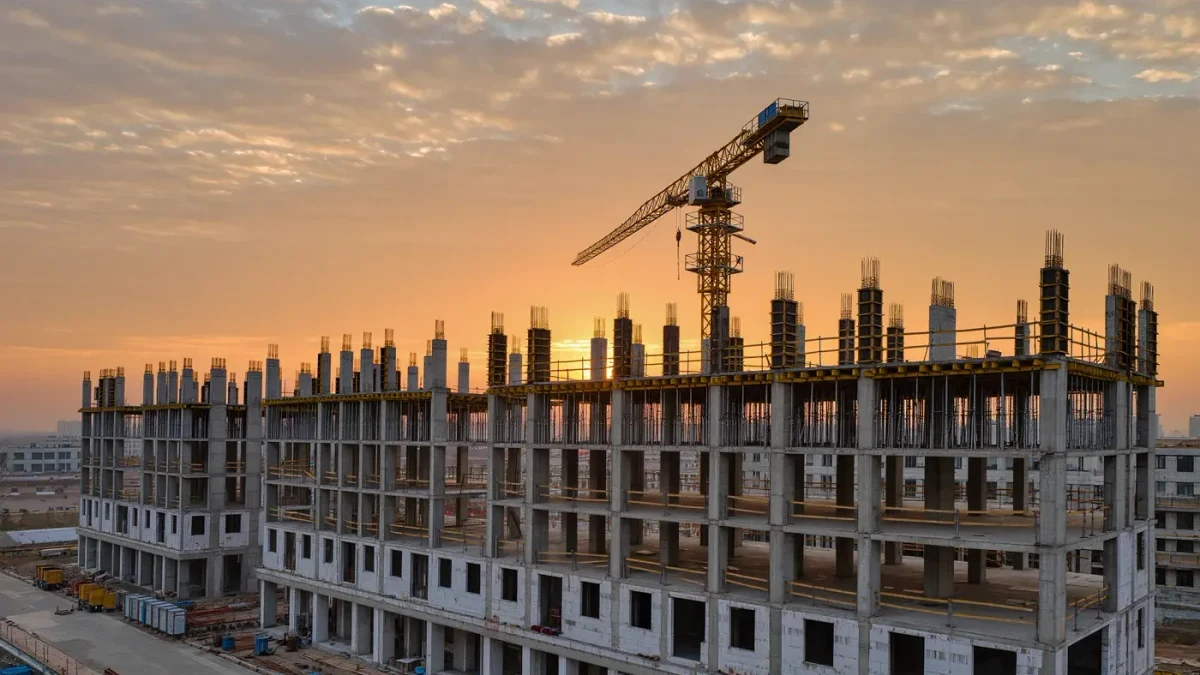
Privately-owned housing starts ran at a seasonally adjusted annual rate of 1,502,000 in March 2026, up 10.8 percent from February, per the Census Bureau and HUD New Residential Construction release of April 29, 2026. The same report showed building permits at 1,372,000, with five-plus-unit permits down 23.5 percent month over month to 427,000.
The release was itself news: schedule adjustments pushed the February and March estimates into a combined April 29 publication, so the market read two months of construction data at once.
What did the combined release show?
Single-family starts came in at 132,000 above the million mark — 1,032,000 at an annual rate, up 9.7 percent from the revised February figure — while completions held nearly flat at 1,366,000, per the April 29 release. Starts recovered ground as builders made up weather-delayed activity; permits, which lead starts by several months, moved the other way, and the multifamily segment led the decline. Five-plus-unit permits were also down 5.3 percent year over year.
Why do permits matter more for rentals?
Five-plus-unit permits are the pipeline for apartment supply. A 23.5 percent one-month drop does not forecast rents by itself, but permits feed deliveries two to three years out, and the apartment completions that pressure rents in 2026 and 2027 were permitted in 2024 and 2025. For a small landlord holding single-family rentals near apartment corridors, the relevant question is which wave of supply the current pipeline still contains.
How should a small investor read mixed starts and permits?
Read them as a timing pair. Rising starts with falling permits is a catch-up pattern: projects already approved breaking ground, fewer new projects entering the queue. That supports rent growth narratives for late-decade deliveries but says nothing about the 2026 leasing season, which is governed by units already completed. The release also carries regional detail — the Northeast showed the strongest relative gains in March — and real estate supply is regional before it is national.
What does the data exclude?
The New Residential Construction series counts new privately-owned units only. It says nothing about the existing-home rental stock, about investor purchases of that stock, or about renovation-driven supply — the channels that matter most to single-family rental owners. The February figures in the combined release are initial estimates subject to revision, as the release's own confidence intervals note.
The next releases in the series return to the normal monthly cadence, and April data — reported with starts easing to roughly 1.47 million — already showed the March rebound cooling. The number worth tracking for rental supply is not the headline start rate but the five-plus-unit permit trend, and in March 2026 it pointed down.