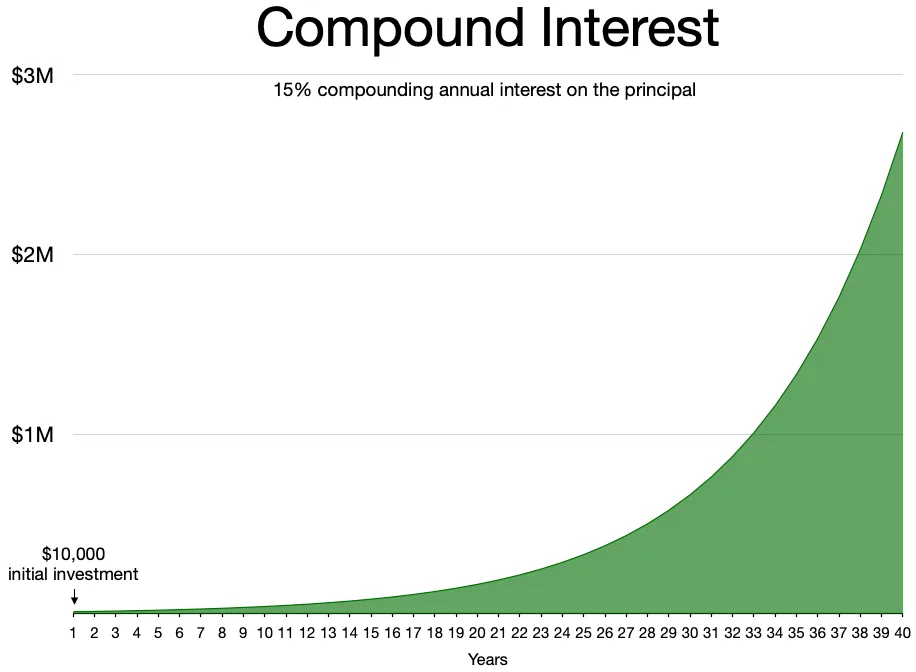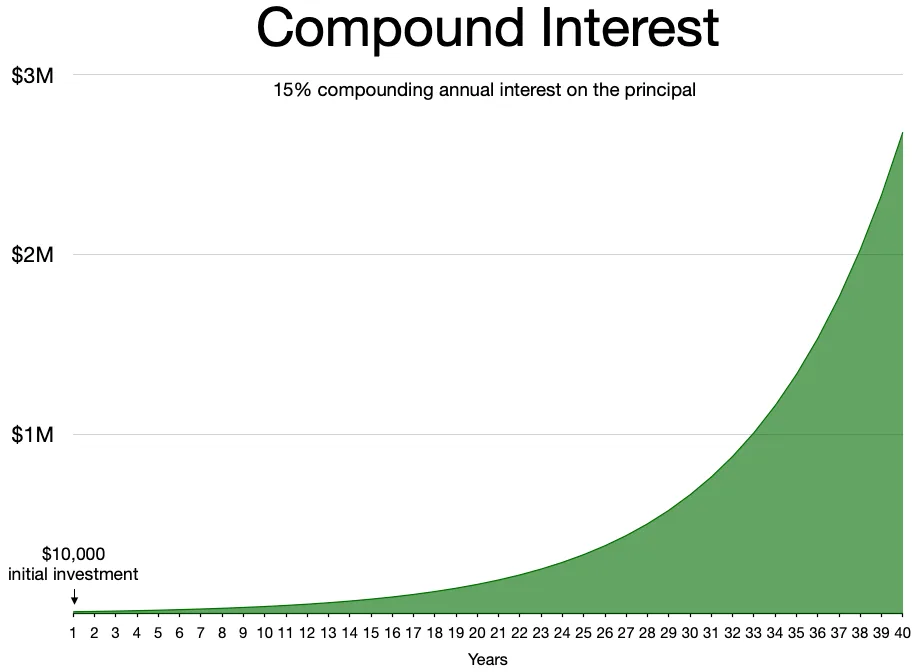
Compound interest has a quiet kind of power. It starts slow, looks unimpressive for years, then bends upward in a way that surprises almost everyone. Savers and borrowers both feel its effects, just in opposite directions.
This article explains what compounding means, shows the math with simple examples, and notes where the effect appears in everyday finance.
What Compound Interest Means
Compound interest is interest accumulated from a principal sum and from previously accumulated interest. It arises when interest that would otherwise be paid out is reinvested, or when a borrower's debt grows by charging interest on interest.
Simple interest works differently. There, interest is figured only on the original principal, so growth stays in a straight line. Compounding bends that line upward, because each period earns interest on a slightly larger base than the period before.
The idea is easier to see than to say. Interest lands on your money. Then interest lands on that interest too. The base grows a little each round, and each round grows a bit more than the last.
A Simple Example
Suppose a balance of $1,000 earns 5 percent per year. After one year it grows to $1,050, and after two years it reaches $1,102.50, because the second year's interest is figured on the new, larger balance rather than the original one. We covered a connected angle in Small Multifamily vs Single-Family Rentals: A Cost-Per-Unit Comparison.
The gap starts small and widens with time. Stretch the same math over decades and the curve does most of the work, which is why long-term savers care so much about starting early. Readers following this should also see House Hacking a Duplex: The Entry Math First-Time Investors Should Run.
Watch the yearly gain in the example. The first year adds fifty. The second year adds more, because the base is larger. Wait ten years and the yearly gain is no longer small. That is the whole trick, and there is no trick at all, only time.
Why Frequency Matters
Compounding frequency is the number of times per year that interest gets capitalized. The calendar can be yearly, half-yearly, quarterly, monthly, daily, or even continuous. More frequent compounding means interest starts earning interest sooner.
To help shoppers compare offers fairly, many countries require financial institutions to disclose an annual equivalent rate, which folds compounding and certain charges into one comparable figure. Terms such as effective annual rate and annual percentage yield describe the same idea in different markets.
Here is a rule of thumb. The rate matters more than the frequency, but frequency still helps. A higher rate with yearly compounding can beat a lower rate compounded daily. Compare the disclosed annual figures, not just the advertised headlines.
Where Compounding Shows Up in Daily Life
- Savings accounts, where retained interest lets the balance grow on itself.
- Bonds, where interest on many corporate and government bonds is paid twice a year.
- Home loans in the United States, which use amortizing schedules rather than compounding balances.
- Revolving debt such as credit cards, where unpaid interest gets added to what you owe.
- Retirement accounts, where gains that stay invested compound across decades.
The same math cuts both ways. Compounding builds wealth for savers and builds balances for borrowers, so the direction depends on which side of the ledger you stand on.
Debt is the sharp edge. A card balance that rolls over each month compounds against you, and minimum payments can stretch the payoff for years. Paying more than the minimum breaks the curve and cuts the total cost. The same math that builds savings can drain them.
Conclusion
Compound interest rewards patience and punishes delay. Start early, reinvest the earnings, and let the curve do the heavy lifting, or pay down debt before the same curve works against you. The math is old, simple, and unforgiving, which is exactly why it matters.