House hacking is the practice of buying a small multifamily property, living in one unit, and renting the others to offset the mortgage. For a first-time investor, a duplex bought with an owner-occupied loan is often the cheapest route into rental ownership, because agency mortgage rules treat an owner-occupied two-to-four-unit property as a home purchase rather than an investment deal. That difference shows up in the down payment, the rate, and the reserves a borrower must show.
Terms for any specific loan are set by the lender and depend on the borrower's full file.
Why Does Owner Occupancy Change the Financing?
Owner occupancy changes the loan because agency guidelines price risk on it. A one-unit primary residence can qualify for down payments as low as 3 percent under standard conventional programs, while a one-unit investment purchase typically requires 15 percent down and carries pricing add-ons. Fannie Mae's guidelines allow the purchase of an owner-occupied two-to-four-unit property with down payments that remain far below investment-property requirements, per Fannie Mae selling guidance as of 2025.
The catch is a real one: occupancy is a promised condition of the loan, generally with a minimum residence period of about twelve months, and misrepresenting occupancy is mortgage fraud. A duplex house hack is therefore a commitment to live next to tenants, not just a financing trick.
What Does the Monthly Math Look Like on a Duplex?
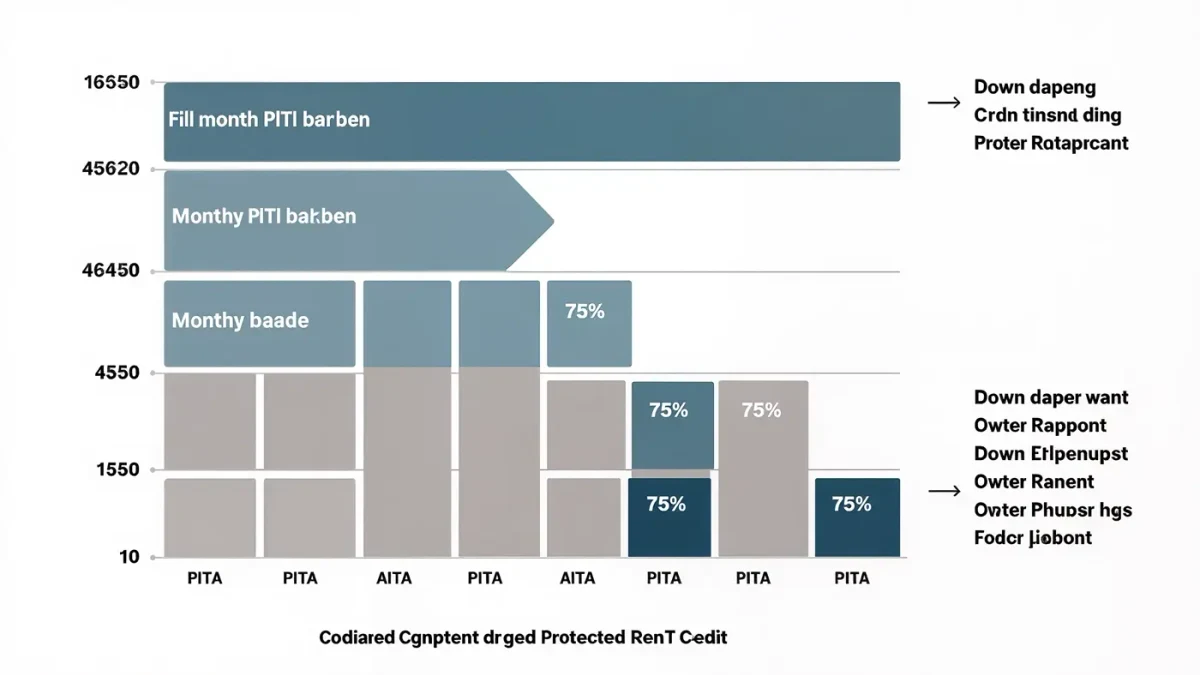
The core of the math is rent crediting. Lenders underwriting an owner-occupied duplex typically count a portion of the rent from the other unit — commonly 75 percent of documented market rent or of the actual lease — toward qualifying income, per standard agency underwriting practice. That credit can raise the price a buyer qualifies for without raising the buyer's actual spending power.
An illustration on round assumptions: a $400,000 duplex financed at a 7 percent 30-year fixed rate produces a principal-and-interest payment near $2,660. Add taxes, insurance, and mortgage insurance where the down payment is under 20 percent, and the all-in housing cost can exceed $3,400 a month. A unit rented at $1,600 with 75 percent credited covers $1,200 of the qualifying burden — but the tenant pays rent to the owner, not to the bank, and vacancy months still arrive.
What PITI and Reserves Should a Buyer Model?
PITI is principal, interest, taxes, and insurance — the full monthly cost of ownership. A duplex buyer should model PITI on the whole building, because the tax bill and the insurance policy cover both units even if only one is owner-occupied at closing. Insurance on a duplex is not a homeowner policy priced like a single-family home; it is written for a building with a rental unit, and quotes differ accordingly.
Reserves are months of PITI a borrower must show in liquid assets after closing. Agency guidance commonly requires more reserves for two-to-four-unit owner-occupied purchases than for single-unit homes, per Fannie Mae and Freddie Mac selling guidance as of 2025. Lenders also apply vacancy haircuts, so the rental income a buyer hopes for and the income an underwriter counts are rarely the same number.
How Do FHA and Conventional Loans Differ on a Duplex?
FHA insures loans on owner-occupied properties up to four units with down payments as low as 3.5 percent, and FHA underwriting counts 75 percent of documented rental income from the other units, per HUD handbook guidance as of 2025. The trade-offs are mortgage insurance premiums that persist for most long-term hold structures and loan limits that vary by county and unit count.
Conventional financing on a duplex can avoid some mortgage insurance once equity reaches 20 percent, but self-employed or thin-file buyers often find FHA's income counting more forgiving. Both routes require the owner to occupy, and both subject three- and four-unit properties to additional reserve and self-sufficiency tests that duplexes generally avoid.
What Operating Costs Does a First-Time House Hacker Miss?
The recurring misses are maintenance on two aging systems sets, vacancy in the rented unit, and the legal framework around tenancy in the property's state. Landlord-tenant law is set by state and local governments: security deposit caps, notice periods, and eviction procedure differ by jurisdiction, so the obligations attached to the rented unit depend entirely on where the duplex sits.
Two budget lines deserve early quotes rather than assumptions. Property taxes reprice after purchase in many jurisdictions, so the seller's current bill can understate the buyer's. And water, sewer, and trash are often metered to the building rather than the unit on older duplexes, making them the owner's cost unless the lease assigns them differently within local legal limits.
What Happens When the Owner Moves Out?
When the owner moves out, the loan stays on its existing terms but the property's status does not change the note — the departure simply converts the duplex into a full rental for tax and insurance purposes. The second unit's rent then joins the first, and the property's cash flow is judged as an investment on its own merits: rents against PITI, reserves against vacancy, and depreciation against taxable income, per IRS treatment of rental real estate as of the 2025 tax year rules.
Some owners repeat the sequence: move out, rent both units, and repeat the low-down-payment purchase on a new owner-occupied property. Each repetition is lawful under the loans' occupancy terms when the residence requirement is honored, and each one concentrates the owner's balance sheet in one asset class — a concentration worth counting, not just celebrating.
Is a Duplex House Hack a Good First Investment?
The honest answer is that the math decides. A duplex purchased near market price, with verified rents, realistic reserves, and an owner genuinely willing to share a wall with a tenant, can produce housing cost savings that no pure investment purchase matches. A duplex bought above comparables with optimistic rent assumptions produces the opposite: a below-market-return asset with the owner locked into living in it.
The numbers to bring to any duplex decision are the verified rent roll, the post-sale tax estimate, an insurance quote written for an owner-occupied two-unit, and a vacancy assumption tied to the local market's actual rate rather than to hope.
How Do Taxes Treat the Owner-Occupied Duplex?
Tax treatment follows use, not ownership. The owner-occupied unit is a personal residence, while the rented unit is a business asset: its share of the building can be depreciated, its share of shared expenses — roof, insurance, mortgage interest — can be allocated and deducted against rental income, per IRS Publication 527 treatment of mixed-use dwellings as of the 2025 tax year. The allocation is by reasonable method, commonly square footage or unit count, and documentation kept from the first month is cheaper than reconstruction in the fourth year.
When the owner later moves out and rents both units, the residence share converts as well, and the eventual sale of a property that was partly a primary residence follows its own rules about exclusion eligibility and depreciation recapture. State treatment varies on top of the federal layer, and none of this is tax advice; the point is that a duplex is two tax objects from the day of closing, and the record-keeping habit should start then too.
Owners who ignore the split until the first filing season routinely overpay, claiming nothing for the rented unit or, at the other error, deducting personal residence costs against rental income. The correct line is boring and mechanical: allocate, document, deduct only what the rented side earns.