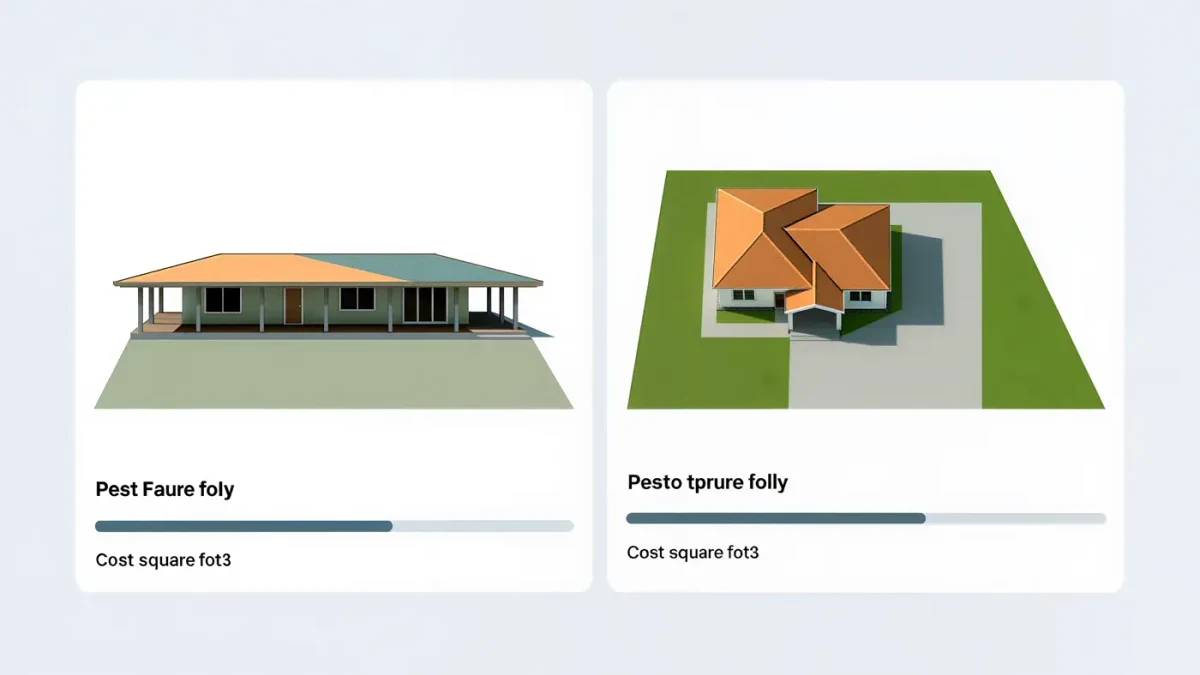
Small multifamily — duplexes, triplexes, and fourplexes — is often described as the sweet spot between house-scale and apartment-scale ownership. The claim deserves numbers rather than adjectives. Comparing a small multifamily building against a portfolio of single-family rentals at equal door count comes down to cost per unit: acquisition costs, operating costs, and financing all behave differently when the units share a roof and a tax parcel.
This is a comparison of how the cost structure works, not investment advice. Figures are attributed and dated, and worked examples are illustrations on stated assumptions.
What Does Cost Per Unit Mean in Rental Investing?
Cost per unit is the purchase price divided by the number of rentable doors. It is the common currency for comparing asset classes, because many landlord expenses scale per unit rather than per building: leasing, turnover make-ready, and appliance replacement are door-by-door costs whether the doors are under one roof or ten.
Other costs scale per building or per parcel: the roof, the water service, the tax assessment process, and the insurance policy. A fourplex concentrates those shared costs in one place, which is the structural argument for small multifamily. The structural argument against it is concentration of a different kind — one vacant unit in a fourplex is 25 percent of gross rent, while one vacant single-family home among four is also 25 percent, but a bad neighbor, a fire, or a re-zoning in small multifamily can hit all the doors at once.
Where Do Operating Costs Actually Diverge?
The divergence shows up in four lines. Insurance is usually written per building, and one policy covering four units under one roof generally costs less than four separate policies on scattered houses. Maintenance benefits from density: one roofing bid covers four units, one HVAC contractor visit can serve multiple systems, and travel time is amortized. Management follows the same pattern — many managers price per door, but per-door fees for a single fourplex often sit below the fees for four scattered houses, per prevailing market practice in 2024-2025 management contracts.
Property taxes are the wildcard. Many jurisdictions assess a single-parcel multifamily differently from individually parceled houses, and assessment appeals — where available — are one filing for the whole building rather than four. Tax rules are set by state and local law, so the comparison has to be run market by market.
How Does Financing Differ Between the Two?
Financing is where single-family has historically held an edge. Loans on one-to-four-unit properties qualify for the agency mortgage market, which delivers the tightest spreads and the longest fixed terms; loans on five-plus units do not, and trade as commercial multifamily debt with shorter terms and rate resets. A fourplex sits on the favorable side of that line, which is precisely why small multifamily is prized.
Investment-occupied agency loans carry higher down payment requirements than owner-occupied ones — typically 15 to 25 percent down depending on program and unit count, per Fannie Mae and Freddie Mac investment-property guidance as of 2025. At a 7 percent mortgage rate, per Freddie Mac's Primary Mortgage Market Survey readings around that level in late 2024 and 2025, the difference between financing one fourplex and financing four houses is less about rate than about transaction count: four closings mean four sets of origination fees, title policies, and appraisals.
What Do Vacancy and Turnover Do to Each Structure?
Vacancy arithmetic is symmetric per door but asymmetric per event. The national rental vacancy rate was 7.3 percent in the third quarter of 2024, per the Census Bureau's Housing Vacancy Survey as of Q3 2024 — a reminder that at the national level roughly one door in fourteen sits empty. In a fourplex, turnovers arrive on a rolling schedule set by four leases; in scattered single-family houses, the same four turnovers each take a full house off line rather than a quarter of a building.
Turnover cost per door is broadly similar — paint, clean, days vacant, leasing — but single-family turnover can run higher per event because tenants of houses stay longer on average and expect more private-space refresh between occupants, per common industry turnover benchmarks as of 2024. The offsetting single-family advantage: a house can be sold to an owner-occupant, which widens the exit universe and can support pricing above investor-only levels.
Which Scales Faster for a Small Investor?
Scale is a per-hour question as much as a per-dollar question. One fourplex and four scattered houses both deliver four doors, but the fourplex concentrates management, maintenance access, and vendor visits on one site. Self-managers commonly find that a single small multifamily building fits inside the time budget of a demanding job, while four scattered houses begin to require systems — or a manager, at the market fee prevailing in the metro.
An illustration on round numbers shows the cost-per-unit gap: a $360,000 fourplex and four $120,000 houses both cost $480,000 per four doors... in fact the fourplex example costs $90,000 per door and the houses $120,000 per door in this constructed case. Real gaps depend on the metro: in much of the Midwest and parts of the South, small multifamily trades at a visible per-door discount to houses; in supply-constrained coastal markets the discount narrows or reverses. Per-door price relationships are local facts to verify, not national constants.
What Should an Investor Compare Before Choosing?
The checklist is short and numeric: price per door, gross rent multiplier per door, actual tax bills after sale, one insurance quote per structure, a market property-management fee quote, and a vacancy assumption tied to the submarket's rate. Add the financing count — one closing versus four — and the liquidity question of the exit: who buys this asset, and at what cap rate, if the answer must come on a specific timetable.
Neither structure dominates. Small multifamily buys cost density and rent concentration; single-family buys exit flexibility and tenant longevity. The comparison is settled by local numbers, not by preference.
How Do Exits Differ Between the Two Structures?
The exit universe decides liquidity. A single-family rental can be sold to an owner-occupant, a small investor, or an institutional buyer, and the owner-occupant bid is usually the highest because it prices the house as a home rather than as an income stream. A fourplex, by contrast, is priced almost entirely on its income — buyers are investors who capitalize the rent roll — so its value moves with the cap rate investors demand and with the accuracy of the rent documentation the seller can show.
That difference cuts both ways. Income-priced assets reward owners who improve net operating income, because every dollar of durable NOI increase multiplies into value at the prevailing cap rate; home-priced assets reward owners who improve the property's appeal to residents, which is a different craft. In a rate environment where financing costs sit near 7 percent, per Freddie Mac survey levels from late 2024 onward, income-priced multifamily has repriced visibly while scarce owner-occupant housing has held better in many metros.
Partial exits differ too. One of four scattered houses can be sold to rebalance a portfolio without disturbing the rest; a fourplex is sold whole or refinanced. For investors who value the option to trim, the scattered structure carries a real option premium that pure arithmetic misses.